

Because of his controlled attitude to life and work, Svante Thunberg has a modest net worth that ranges from half a million to a million dollars. Thunberg has subtly increased his income through performing, producing, writing, and overseeing his family’s artistic pursuits, in contrast to celebrities who strive for luxury. His financial path is an example of moderation—a way of life where integrity comes before appearances and is characterized by purpose rather than excess.
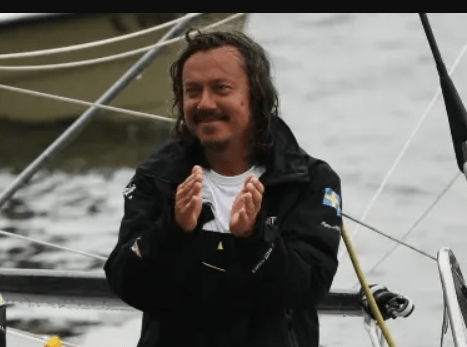
Svante grew up surrounded by the performing arts, having been born into a family of Swedish actors. He starred in theatrical plays and television shows that were more culturally significant than commercially driven. Like his meticulous, quiet, and focused personality, his profits were consistent but not lavish. He eventually switched from acting to producing, finding fulfillment in endeavors that reflected his ideals, such as those that looked at sustainability or social issues.
| Category | Details |
|---|---|
| Full Name | Svante Fritz Vilhelm Thunberg |
| Date of Birth | June 10, 1969 |
| Birthplace | Stockholm, Sweden |
| Occupation | Actor, Producer, Author, Environmental Advocate |
| Notable Work | “Scenes from the Heart,” “Our House Is on Fire” (co-authored with family) |
| Known For | Father and manager of climate activist Greta Thunberg |
| Estimated Net Worth | $500,000 – $1,000,000 (approx.) |
| Partner | Malena Ernman (Swedish opera singer) |
| Reference | Wikipedia – Svante Thunberg |
The approximate amount associated with his name, which ranges from $500,000 to $1 million, seems remarkably appropriate. It is the culmination of decades of steady but modest labor in the entertainment business, which has been somewhat supported by revenues from novels he co-wrote with his wife and daughters. His financial tale is especially motivating, though, because his decisions reflect the morals that characterize his family. They value sincerity, simplicity, and environmental responsibility over material luxury.
Swedish tax documents and local media have frequently highlighted that the Thunberg family’s wealth is shockingly average, despite the wild speculations of some. The family’s minimalist lifestyle—used clothing, plant-based diet, and a home that prioritizes coziness over opulence—is confirmed by reports. When Svante’s artistic endeavors and Malena Ernman’s opera career are combined, their combined income probably comes to between $1.5 and $2 million. It’s intelligently used to support organizations that are important to them, comfortable, and not overly lavish.
Svante’s more intimate roles as a father and facilitator complement his work experience as an actor and producer. By traveling with his daughter Greta Thunberg to climate meetings and making sure she was safe during transatlantic sailings, dad became the logistical backbone of the global climate movement. It’s labor that has incalculable moral worth yet doesn’t pay. He devotes his time and energy to advocacy instead of accumulation, which seems incredibly in line with who he is.
Conspiracy theories claiming the family benefits from Greta’s activism have been subtly refuted by their financial transparency. Instead, the money made from books and public appearances is frequently reinvested in environmental projects. Their dedication to a cause rather than a brand is demonstrated by their very deliberate reinvestment. Their modest but significant financial impact supports their assertion that individual responsibility is the first step toward sustainability.
Svante’s career is similar to that of many mid-tier European performers in the creative community: steady theater revenue, small royalties from previous TV parts, and sporadic producing credits. Even if such profits might not make news, they have given him the opportunity to live a genuine life. It’s a profession based on outstanding dependability that strikes a balance between societal conscience and artistic fulfillment. The quiet professionalism of actors like Stellan Skarsgård’s formative years—a dedication to craft before fame—is also reflected in his trajectory.
Svante co-wrote two family memoirs, Scenes from the Heart and Our House Is on Fire, in addition to his artistic endeavors. The personal development of the Thunbergs and Greta’s ascent to activism are chronicled in both volumes. Even if they are little, the revenues from these works help the family out financially. More significantly, they have positioned Svante as a perceptive storyteller who can skillfully combine intimate tales with more general social commentary. Like his parenting style, he writes in a calm yet convincing manner.
Svante’s tale is notable for the way he strikes a balance between his personal life and international recognition. Svante stays in the background, handling logistics, providing emotional support, and making sure Greta’s message stays on course, even if his daughter has emerged as a symbol of generational activism. In order to maintain momentum without commercializing the movement, this function is especially important. His unobtrusive commitment demonstrates a leadership style that flourishes in the background.
Additionally, his net worth is a reflection of decisions that are astonishingly successful in upholding morals above conceit. The Thunbergs have chosen to invest in sustainability and education rather than luxury. Instead of making money, the family raises awareness through their publications, public discussions, and philanthropic activities. The notion that activism may thrive outside of capitalism’s accoutrements is further supported by the fact that Greta’s financial recognition, whether in the form of awards or donations, has mostly gone to environmental organizations.
Svante’s financial profile serves as a counterexample to the contemporary notion that success must be quantified in millions of dollars, when viewed from a wider cultural perspective. It serves as a reminder that a tiny salary can support a life of enormous significance and that quiet influence can be extremely potent. Earnings appear less about self-interest and more about a shared goal for a man who has dedicated years to advancing his wife’s profession and helping his daughter with her goals.
Svante’s wealth is comparable to that of many European creatives who place a higher priority on work-life balance than fame. His contemporaries in Scandinavian television and theater frequently fall into a comparable salary range, demonstrating that creative relevance is not constrained by economic restraint. Actually, it might even improve it by encouraging creativity that isn’t constrained by business demands.
The way that Svante’s activity and finances interact also has a philosophical undertone. His lifestyle decisions—forgoing flights, cutting back on consumption, and emphasizing low-carbon travel—have significantly decreased his carbon footprint and demonstrate his support for Greta’s environmental causes. Every choice he makes, including how much money he spends and how much he makes, conveys the subliminal message that consistency in both words and deeds is more valuable than material prosperity.
