

The tale of a teenage athlete who redefines success is told via Carlos Alcaraz’s projected $50 million wealth. In addition to his athletic prowess, his journey from a little village in Murcia to the top of the tennis world has been incredibly inspirational due to his genuineness and humility. Alcaraz, who is only 22 years old, has won hearts and trophies by fusing intense competition with an unexpectedly realistic perspective on life.
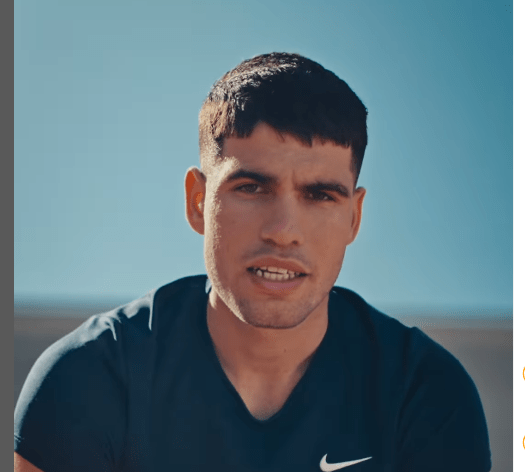
That viewpoint was formed during his early years in El Palmar. Even as his wealth increased, Carlos never lost sight of his roots because he was raised in a close-knit family. He continues to live in their family apartment with his parents and brothers, a simple practice that stands in stark contrast to the opulent way of life frequently associated with professional athletes. His idol Rafael Nadal, whose grounded demeanor also made him a cherished national hero, is quite akin to that simplicity.
Carlos Alcaraz – Personal and Professional Overview
| Attribute | Details |
|---|---|
| Full Name | Carlos Alcaraz Garfia |
| Date of Birth | May 5, 2003 |
| Age | 22 (as of 2025) |
| Nationality | Spanish |
| Profession | Professional Tennis Player |
| Estimated Net Worth | $50 million (as of 2025) |
| Career Titles | 5 Grand Slams (US Open, Wimbledon x2, French Open x2) |
| Career Prize Earnings | Over $35 million |
| Major Sponsors | Nike, Rolex, Babolat, BMW, Calvin Klein |
| Residence | El Palmar, Murcia, Spain |
| Reference |
Alcaraz became the youngest male player to earn the No. 1 ATP ranking at the age of 19, accomplishing something that few believed was possible: winning the 2022 US Open. It was a profound and significant accomplishment. The triumph represented a generational change and was more than just a numerical victory. After Federer, Nadal, and Djokovic ruled tennis for years, the sport discovered a new spokesperson who was youthful, gregarious, and astonishingly resilient under duress.
His financial gains from his quick ascent have been especially noteworthy. According to Forbes, Alcaraz earned an estimated $48.3 million a year in 2025, making him the highest-paid tennis player. The remainder comes from endorsements, with $13.3 million coming from prize money and participation fees. His list of endorsements is a veritable who’s who of international renown: BMW for invention, Babolat for performance, Rolex for elegance, and Nike for clothing. His status as a cross-generational superstar who appeals to both traditional and digital audiences has been greatly enhanced by these collaborations.
It struck a deep chord when Alcaraz defeated Novak Djokovic and raised the Wimbledon title in 2023. The game was a declaration of succession more than merely a victory. The future won out when the reigning great faced it. With the $3.1 million reward for that victory, his career earnings at the time surpassed $20 million. Following another Wimbledon victory in 2024, those figures rose sharply to over $35 million. He is one of the most complete players of his time due to his consistency on clay, grass, and hard courts, which is uncommon even among champions.
What is most notable about Alcaraz, aside from his financials, is his perspective on celebrity. He rarely goes overboard, even if he makes millions. Carlos Alcaraz acknowledges in the Netflix documentary Carlos Alcaraz: My Way that his most expensive purchase is footwear, which is a surprisingly common pastime for a man of his size. He frequently travels with his close friends, family, and coach Juan Carlos Ferrero—the former world No. 1 who has taken on the roles of father figure and mentor—when he isn’t competing. Their collaboration, which strikes a balance between youthful vigor and seasoned discipline, has been especially helpful for his development.
It is impossible to overestimate Ferrero’s impact on Alcaraz’s emotional and technical development. By means of organized instruction and emotional support, the pair has developed a highly effective strategy that prioritizes progress over publicity. Alcaraz’s explosive game is perfectly balanced by Ferrero’s composed manner, which enables him to perform well under duress and bounce back quickly from losses.
Alcaraz is well-known outside of sports as well. He has come to represent contemporary athleticism: self-assured yet sympathetic, focused yet approachable. This equilibrium has been welcomed by brands. For example, his current advertising efforts with Calvin Klein position him as a cultural pioneer and rival, appealing to younger audiences who view him as genuine and ambitious. That image is supported by his online persona, where he provides tidbits about his travels, family time, and training. His posts, which are frequently upbeat and modest, deepen the emotional connection he has with his followers.
Carlos Alcaraz and Jannik Sinner’s rivalry has significantly invigorated tennis around the world, bringing back memories of the Federer–Nadal period. The two have dominated almost all Grand Slam finals between 2023 and 2025, switching wins and challenging one another. The contrast between Sinner’s accuracy and Alcaraz’s flair has been incredibly successful in revitalizing younger audiences’ attention. This relationship demonstrates how rivalry can be both respectful and intense, embodying both mutual respect and competitiveness.
Alcaraz has shown a growing interest in giving back off the court. He promotes sports engagement among kids from low-income families in Spain through youth initiatives and community service. Even though his charitable endeavors are modest, they demonstrate his conviction that opportunity ought to be universally available, which is a particularly potent message from someone who came from humble roots.
Alcaraz’s financial future is remarkably promising. If he keeps winning at his current pace, analysts estimate that his net worth might reach $150 million in the next ten years. He is an advertiser’s dream because of his potential for longevity in the sport, his impeccable public persona, and his widespread appeal worldwide. Now that Nadal is nearing the conclusion of his career and Federer is retiring, he can comfortably assume the role of tennis’ global ambassador.
He has taken on that job with remarkable ease. Alcaraz seemed to have handled celebrity with grace, in contrast to many young stars who find it difficult. He speaks with a relaxed assurance that comes from being real rather than practiced. In an age of excessive commercialization, his excitement on the court—the wide smile, the exuberant celebrations—reflects a sincerity that is especially welcome.
