

It was once said that Mike Lazaridis was the one who made sure every executive had a smartphone. His invention resulted in the development of BlackBerry, a company that rose to prominence as a global symbol of encrypted messaging, mobile security, and corporate effectiveness. However, Lazaridis created a culture rather than merely a commodity. At its height in 2008, Lazaridis’s net worth reached an incredible $4 billion, while BlackBerry’s market valuation surged to $85 billion. He was not only rich, but also quite powerful.
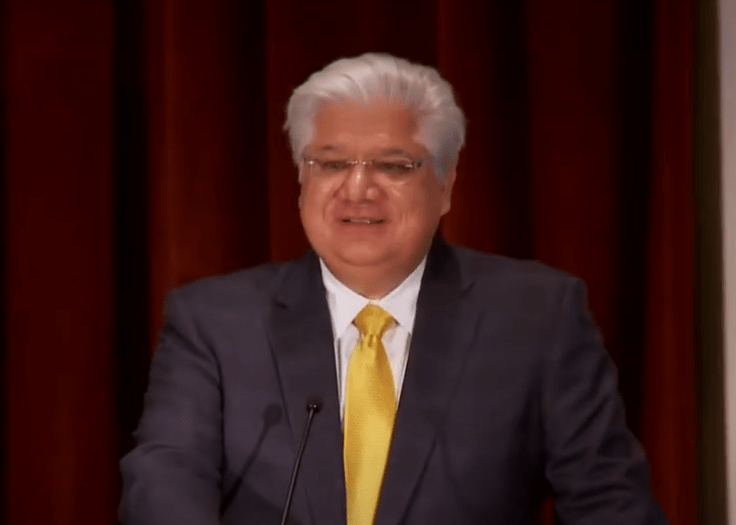
That mound of money has changed during the last ten years. His estimated net worth is around $600 million, which is still a large amount but much less than the skyrocketing levels of his BlackBerry heyday. However, his response—rather than the loss—is what makes his story noteworthy. Lazaridis deliberately changed course, investing in scientific institutions and quantum innovations that could significantly impact the next century, in contrast to many tech tycoons who disappear during downturns.
Mike Lazaridis – Key Personal and Professional Facts
| Attribute | Information |
|---|---|
| Full Name | Mihal “Mike” Lazaridis |
| Date of Birth | March 14, 1961 |
| Age | 64 |
| Place of Birth | Istanbul, Turkey |
| Nationality | Greek-Canadian |
| Education | University of Waterloo (dropped out in 1984, honorary degree awarded in 2000) |
| Major Companies Founded | BlackBerry Limited (formerly Research In Motion), Quantum Valley Investments |
| Current Role | Founder & Managing Partner, Quantum Valley Investments |
| Major Institutions Founded | Perimeter Institute, Institute for Quantum Computing, Quantum-Nano Centre |
| Honors and Awards | Officer of the Order of Canada, Order of Ontario, Academy Award, Emmy Award, FRS |
| Estimated Net Worth | $600 Million |
| Net Worth Peak (2008) | $4 Billion (BlackBerry market cap at $85 Billion) |
| Reference Source |
Lazaridis, who was reared in Canada after being born to Greek parents in Istanbul, was always incredibly inquisitive. In 1984, he left Waterloo University to co-found Research In Motion (RIM). RIM became a leading power in mobile communication by the late 1990s. Sleek, effective, and incredibly dependable, the BlackBerry was a necessity for governments, businesses, and celebrities alike.
Lazaridis was reinventing business communication while Apple was still working on the iPod. High-stakes sectors including banking, defense, and law benefited greatly from the BlackBerry’s secure servers and push-email capabilities. When Barack Obama became president, he famously insisted on keeping his BlackBerry, and businessmen clung to their gadgets almost religiously. For its co-founder, that devotion resulted in enormous personal wealth and billions in market worth.
But after 2007, the mobile ecology started to change quickly. The iPhone presented a model that was noticeably quicker at adjusting to market trends thanks to its touch interface, App Store, and widespread customer popularity. The leadership of BlackBerry, used to corporate supremacy, did not change course quickly enough. The scene was entirely different by the time Android became popular. The corporation found itself playing catch-up in a race it previously led as its market share shrank and its stock value plummeted.
After leaving his managerial position in 2012, Lazaridis briefly chaired the Innovation Committee before leaving the firm altogether. Few could have anticipated the shift that ensued. Lazaridis focused on what might be instead of holding on to what had been.
He and his partner Douglas Fregin co-founded Quantum Valley Investments in 2013. Their objective was very creative: to use quantum information technology to create commercial applications. Within a fiscal year, the majority of tech investors seek returns. Lazaridis adopted a generational perspective. His patient capital-based fundraising methodology was designed to foster scientific revolutions rather than merely quick commercial launches.
This impulse wasn’t new. He had already contributed tens of millions to the founding of the Perimeter Institute for Theoretical Physics as early as 1999. He established the Mike & Ophelia Lazaridis Quantum-Nano Centre and the Institute for Quantum Computing at the University of Waterloo in 2002. These establishments did more than just garner media attention; they drew top-tier physicists and established Canada as a leading force in quantum research.
Lazaridis significantly raised Canada’s profile internationally in basic research by prioritizing concepts above immediate results. He established ecosystems where innovations are fostered rather than hurried by means of strategic alliances with governments and academic institutions. Although it takes place in more sedate, academic hallways, this high-risk, high-reward model is reminiscent of the strategies of generous tech titans like Elon Musk and Bill Gates.
Even though his wealth has decreased, Lazaridis’s legacy has endured remarkably well. His accolades, which include an Emmy for broadcast engineering and an Academy Award for technical cinema advancements, demonstrate his dedication to invention in a variety of industries. In addition to receiving honorary doctorates and being included to the TIME 100 list of the most influential people, he was awarded an Officer of the Order of Canada. He was elected a Fellow of the Royal Society in 2014, which is a very high honor for someone without a PhD.
Something remarkably similar to the trend observed in other well-known tech professionals is also revealed by Lazaridis’s story. Lazaridis never completely left the IT industry; he only changed his job inside it, much like Steve Jobs did when he rejoined Apple after being fired. Lazaridis is subtly influencing the framework for quantum computing, artificial intelligence, and ultra-secure communication, while Jobs reinvented consumer electronics. The organizations he established might be crucial to the technologies that shape the next half century.
He has also contributed to the development of an atmosphere that allows young Canadian scientists to innovate domestically through his charitable investments. In addition to empowering younger generations of researchers to remain, study, and contribute locally, this has significantly decreased brain drain. Although difficult to measure, that type of long-term national influence is extremely significant.
He no longer seeks public recognition or initial public offerings. Rather, he is establishing the foundation for discoveries that have the potential to rebalance entire industries. Lazaridis is firmly rooted in the cutting edge of science, whether it is through theoretical physics opening up new vistas or quantum encryption revolutionizing cybersecurity.
