

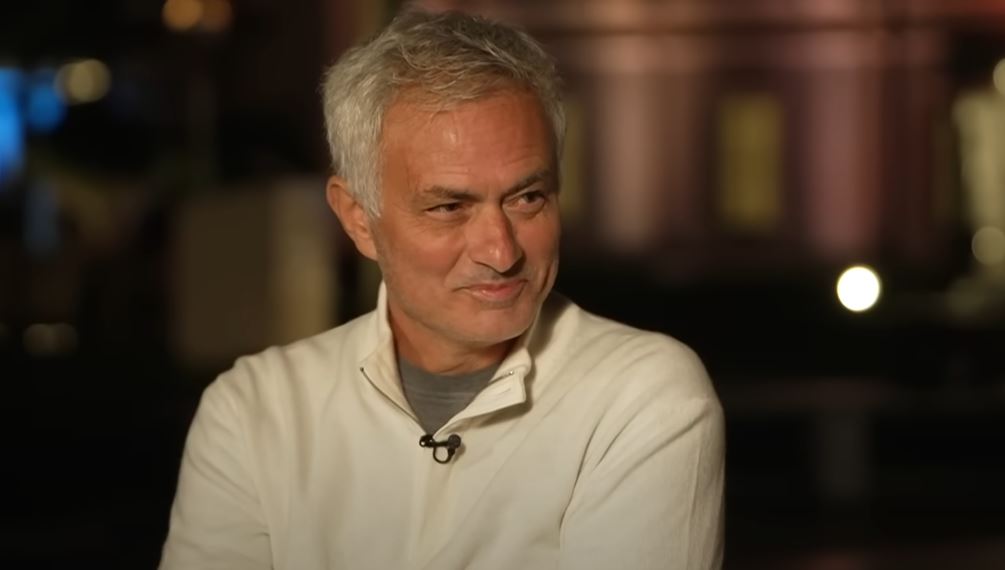
Jose Mourinho’s career and wealth demonstrate an intriguing harmony of charisma, tenacity, and strategy. His estimated net worth of $120 million is evidence of decades of outstanding leadership and a charismatic personality that continues to enthrall millions of people. His success feels especially novel because it combines astute strategic thinking with skillful self-promotion, making him one of the most lucrative personalities in contemporary sports.
Mourinho’s journey started in a place far from luxury, having been born in Setúbal, Portugal. His early years were characterized by purpose and passion. Following his famous one-day departure from business school, he focused on football management and sports science. He gained insight into leadership psychology in addition to tactics by drawing on his early experiences as Sir Bobby Robson’s interpreter at Sporting CP and Barcelona. His trademark would be the equal parts of instinct and intelligence.
| Aspect | Details |
|---|---|
| Full Name | José Mário dos Santos Mourinho Félix |
| Date of Birth | January 26, 1963 |
| Birthplace | Setúbal, Portugal |
| Nationality | Portuguese |
| Profession | Football Manager and Former Player |
| Current Role | Benfica Head Coach (2025) |
| Estimated Net Worth | $120 million (2025) |
| Peak Annual Salary | $27 million (Manchester United, 2016–2018) |
| Key Income Sources | Football contracts, brand endorsements, media work, and severance packages |
| Endorsement Partners | Adidas, Samsung, Jaguar, American Express, Braun |
| Major Career Honors | Champions League (2), Premier League (3), La Liga (1), Serie A (2), Europa League (1) |
| Spouse | Matilde “Tami” Faria (m. 1989) |
| Children | Matilde (b. 1996), José Jr. (b. 2000) |
| Recognition | Portuguese Coach of the Century (2015), FIFA World Coach of the Year (2010) |
He started his ascent at Porto, where he won the Champions League and the UEFA Cup, launching him into the public eye as Europe’s most promising young manager. An important turning point was his move to Chelsea in 2004. Supported by Roman Abramovich’s financial resources, Mourinho brought two Premier League championships, numerous cups, and an air of superiority that seemed incredibly successful in shifting the competitive landscape of English football.
He had made a name for himself as a serial winner with a talent for storytelling by the time he relocated to Inter Milan. He led Inter to a historic treble in 2010, solidifying his place among the greats, making his time in Italy especially memorable. Naturally, the financial benefits came. Elite teams started vying for his services, frequently extending buyout clauses and extraordinary contracts that would determine his future financial success.
Mourinho’s skill at transforming setbacks into opportunities is remarkably comparable to a chess master who uses a loss as a springboard for victory. In 2018, he was paid $28 million after being fired by Manchester United. Another $15 million was added after Tottenham was fired in 2021. He has made more than $60 million overall from compensation agreements alone, which shows that his worth goes beyond wins. Even after clubs decided to move on, they still paid him well for his knowledge.
His wealth has also been significantly shaped by endorsements. His enduring, self-assured, and disciplined personal brand is exemplified by his longstanding partnership with Adidas. Partnerships with Samsung, Braun, and Jaguar enhanced his standing as a world-renowned representative of style and power. These agreements have been especially advantageous for him because they have allowed him to stay relevant during managerial pauses and to reach audiences outside of the football world.
Mourinho created an image that feels remarkably adaptable through these endeavors. He exudes the same commanding energy—controlled, methodical, and laser-focused—whether he is in charge of a dressing room or the lead in a luxury car commercial. Even when results falter, his confidence is infectious and motivates both critics and admirers to pay attention.
The return of Mourinho to Benfica in 2025 represented a poetic full circle. He went back to his roots after managing Europe’s top clubs for decades, claiming that his passion for the game, not money, was what drove him. He grinned and remarked, “I would have made more money if I had stayed at home.” At his stage, financial security is assured, but legacy is still being written. That statement conveyed an emotional truth.
Over the course of his 25-year career, Mourinho has managed such legendary players as Zlatan Ibrahimović, Didier Drogba, and Cristiano Ronaldo—people who, like him, exude confidence wrapped in complexity. He frequently has tense and admiring relationships with players, but this intensity is still his greatest strength. He shapes dressing rooms as if they were stages for psychological warfare, demonstrating his theatrical and disciplined leadership.
Mourinho maintains a grounded and private family life away from football. He has been married to Matilde Faria since 1989, and he frequently refers to her as his emotional support system. His son José Jr. followed a career in football, while their daughter, Matilde, has become well-known as an influencer based in London. Despite his international career and constant media attention, this close-knit family dynamic has proven incredibly resilient.
Significantly understated are Mourinho’s investments. Rather than ostentatious extravagance, he prefers real estate in Portugal, London, and Italy—assets that reflect his sophisticated sensibility and are very effective at conserving wealth. His coaching philosophy is reflected in his portfolio, which is long-term, strategic, and calculated.
Mourinho’s lifetime earnings from football contracts and brand deals are estimated by financial analysts to be over $200 million, although a large portion of that has been reinvested. It is especially remarkable how he has managed to stay relevant in spite of changing coaching philosophies and sports trends. Few managers have been as adaptable, transforming every challenge into a chance for reinvention and every dismissal into a fresh start.
Mourinho has a cultural impact that goes beyond football. He has become as well-known as movie or music stars thanks to his persona, which combines elements of philosophy and provocateur. His brand, like that of Beyoncé or Leonardo DiCaprio, is based on charisma rather than consistency. He is incredibly fascinating because he thrives on narrative tension.
Mourinho’s motivation seems unabated at age 62. His self-awareness is remarkably clear, his humor disarmingly quick, and his tactical mind unwavering. He speaks with the assurance of someone who is aware of his place in the greater scheme of sport and society when he makes jokes about his personal scandals or considers his professional failures. His tenacity has come to represent tenacity in a challenging field.
Mourinho’s financial success provides a particularly motivating lesson for the future. It demonstrates that being genuine and long-lasting can be just as profitable as following trends. His wealth is not just a result of contracts; it is also a reflection of his character, which has been steadily cultivated, tenaciously defended, and wisely managed.
