

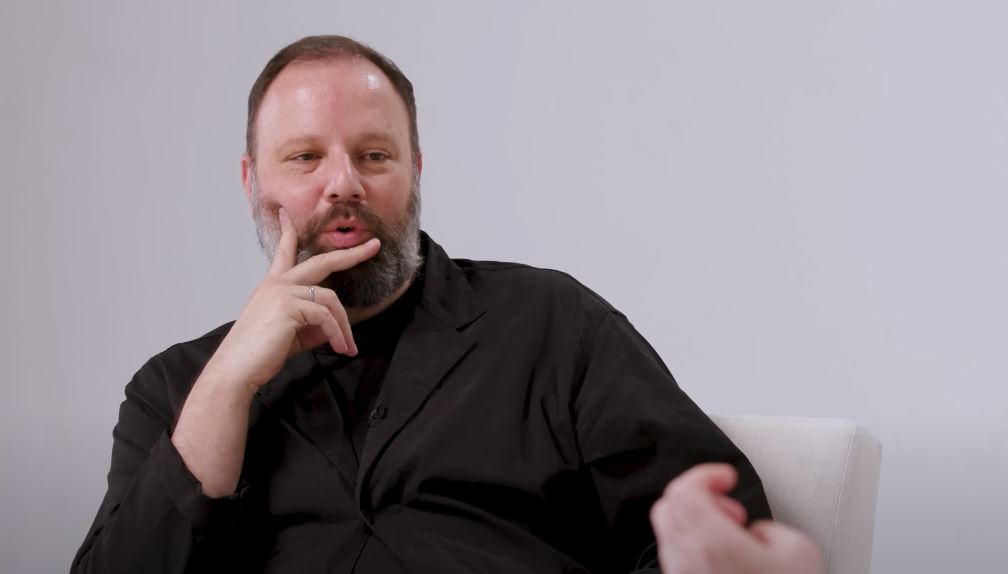
The financial journey of Yorgos Lanthimos is an example of how creativity can be turned into money. Not only is his estimated $8.6 million fortune a sum, but it also symbolizes the methodical ascent of an artist who established his reputation through creativity. Lanthimos has created a career that is both emotionally and financially fulfilling by transforming discomfort into beauty, much like a conductor leading an orchestra of contradictions.
He was raised in Athens, surrounded by the rhythm of his mother’s practical pragmatism and his father’s basketball career. Rather than following convention, his early years were characterized by curiosity. His path was drastically changed when he decided to pursue filmmaking instead of business studies. He immersed himself in the techniques of motion, framing, and silence while attending the Hellenic Cinema and Television School; these would later come to define his cinematic style.
| Category | Details |
|---|---|
| Full Name | Giorgos “Yorgos” Lanthimos |
| Date of Birth | September 23, 1973 |
| Birthplace | Pangrati, Athens, Greece |
| Nationality | Greek |
| Profession | Film Director, Screenwriter, Producer, Theatre Director |
| Height | 6 feet 2 inches (1.88 m) |
| Estimated Net Worth | $8.6 million (as of 2025) |
| Major Works | Dogtooth, The Lobster, The Favourite, Poor Things, Kinds of Kindness |
| Notable Collaborations | Emma Stone, Olivia Colman, Willem Dafoe, Rachel Weisz |
| Awards | BAFTA Award, Golden Lion, Five Academy Award Nominations |
| Spouse | Ariane Labed (m. 2013) |
| Residence | Athens, Greece |
Prior to becoming famous, Lanthimos honed his talents in the backstage areas of stage plays and advertisements. He benefited greatly from these early experiences, which provided him with a remarkable comprehension of the coexistence of emotion and accuracy. His participation in the 2004 Olympic ceremonies in Athens suggested a storytelling style that blended intimacy and grandeur. It was an indication of the self-assurance he would subsequently exhibit in his filmmaking.
Dogtooth, a 2009 film that unnerved viewers and introduced a new cinematic philosophy, was his first pivotal moment. It won the Cannes Un Certain Regard prize for its remarkable ability to blend absurdity with nuanced truth. His method was compared by critics to that of filmmakers such as Stanley Kubrick and Lars von Trier, who also altered ideas about power and narrative. Despite having a small budget, it had a huge impact because it made him a creative export for Greece and provided him with access to international opportunities.
The Lobster (2015), his English-language debut, signaled his foray onto a wider platform. The film’s dark satire on control and love struck a chord with many, earning over $18 million. It demonstrated that complexity could be profitable as well. Lanthimos created a stable financial rhythm that was both profitable and sustainable by utilizing solid alliances with distributors and streaming services.
The Favourite (2018), his masterpiece, took his career to a new level. He worked with Olivia Colman and Emma Stone to create a film that expertly struck a balance between luxury and restraint. With a global box office total of over $95 million, the movie cemented his reputation and greatly increased his earnings. This achievement demonstrated a director who could deftly balance artistic merit with financial gain.
Particularly inventive have been Lanthimos’s later partnerships with Emma Stone. Their creative chemistry is similar to that of Leonardo DiCaprio and Martin Scorsese, a duo that regularly creates art with a marketable appeal. Together, they made Kinds of Kindness (2024) and Poor Things (2023) a reality, both of which were well received by critics and made money. Through profit-sharing and licensing agreements, these projects not only strengthened Lanthimos’s reputation as a creative force but also broadened his financial holdings.
According to reliable financial sources, Lanthimos receives $2–$5 million for each film in fees for writing, directing, and producing. When royalties and international rights are taken into account, his total career income probably exceeds $20 million. His estimated net worth, after taxes and reinvestments, is currently $8.6 million, and it keeps rising as his influence grows.
He demonstrates his confidence in his artistic direction by investing a large portion of his wealth back into his productions. He obtains long-term royalties from distribution and streaming rights by providing development funding and retaining a portion of the business. This extremely effective model fosters financial longevity while guaranteeing creative freedom.
Lanthimos’s wealth is determined by his purpose rather than by his extravagance. He lives quietly with his wife, actress Ariane Labed, and splits his time between Athens and London. His way of life is still grounded and noticeably modest when compared to his Hollywood counterparts. Instead of showing off his wealth, he makes investments in creative endeavors, coaching up-and-coming filmmakers and writing unconventional scripts.
He will continue to move toward a more ambitious cinematic scale with his next film, Bugonia (2025), which stars Emma Stone once more. It is anticipated that the film will do remarkably well both critically and commercially because of its satirical take on morality and technology. According to industry insiders, Lanthimos could make more than $5 million from this project alone, demonstrating the smooth coexistence of market appeal and meaningful art.
His integrity as an artist has not changed over the years. He was able to retain the creative control that many filmmakers lose as their work grows in size by remaining independent of major studio systems. Significantly inventive, this autonomy acts as a philosophical and financial model for younger directors who want sustainability without sacrificing quality.
Lanthimos has a social impact as well. His films analyze topics that reflect current anxieties, such as emotional repression, control, and conformity. His work resonates with audiences through introspection rather than consolation. By doing this, he has created an emotional economy in which discomfort leads to conversation, which in turn creates cultural significance.
Lanthimos promotes a reexamination of normalcy in his films. His cold yet oddly tender storytelling techniques imply that contradiction is what makes humanity thrive. In addition to defining his creative identity, this special balance has maintained his financial success.
When contrasting Lanthimos with contemporary figures such as Greta Gerwig or Bong Joon-ho, one discovers remarkably similar traits: constancy, bravery, and purposefulness. Each director shows that when authenticity is the driving force behind the work, financial savvy and emotional intelligence can coexist. Lanthimos is one of the most admired filmmakers of this era because of his capacity to forge lasting partnerships while retaining his artistic independence.
His prospects for the future are unquestionably promising. Directors such as Lanthimos are becoming more and more valuable as streaming platforms increase their demand for unique content. His projects are highly sought after by audiences and investors alike due to his distinct visual language and intellectual edge. This guarantees that his financial security will endure despite changes in the film industry.
